Wednesday, 2 May 2018

Violence Against Women Begins in the Womb

Why female feticide threatens the social order.

Sabu George, a Delhi-based researcher, has spent the past quarter-century exposing what he calls “the worst kind of violence” in Indian history—the elimination of millions of unborn girls. He regards it as nothing less than genocide and describes the first few months in the womb as “the riskiest part of a woman’s life cycle in India.”

For the last two decades, reports have consistently illustrated the extent of the problem. After investigators uncovered 400 pieces of bone believed to be of female fetuses, reporters gave graphic details: “Last September,” wrote Raekha Prasad and Randeep Ramesh in The Guardian, “remains of dozens of babies were exhumed from a pit outside an abortion clinic in Punjab. To dispose of the evidence, acid was used to melt the flesh and then the bones were hammered to smithereens.”

Although it’s easy to relegate this story to the remote regions of the developing world, India is representative of a global problem of epic proportion. In the year of the #MeToo movement, the practice of female feticide offers us a powerful depiction of the institutionalization of violence against women. Sex-selective abortions perpetrate violence against the most vulnerable, unseen victims. What emerges is an alarming picture of mass termination: prenatal offspring, aborted for no other reason than they happen to be female.

According to a study by The Lancet, the toll in India averages half a million fetuses each year, with some regions of India faring particularly badly. Although accurate figures are very difficult to compile, estimates suggest that “among the stock of women that could potentially be alive in India today, over 25 million are ‘missing.’” ...

Continue reading...


from
http://www.christianitytoday.com/women/2018/may/violence-against-women-begins-in-womb-abortion.html

Jordan Peterson vs Matt Dillahunty

I have yet to watch this, though reading the comments, it seems Dillahunty may have won it. Look forward to watching.  

from
http://www.patheos.com/blogs/tippling/2018/05/02/jordan-peterson-vs-matt-dillahunty/

Tuesday, 1 May 2018

Paige Patterson and Doing the Right Thing for the SBC, Again

Yes, it is time for Paige Patterson to take his well-earned retirement.

Social media is abuzz with comments about the church and domestic violence.

The cause is not a new incident; rather, it’s the result of an old audio clip that has resurfaced with comments from the president of Southwestern Baptist Theological Seminary, Paige Patterson. His statements in an institutional press release and Baptist Press interview have not helped the situation.

It may seem odd to outsiders, so I thought I’d share some explanation of what’s going on, why Southern Baptist leaders generally do not criticize one another, and why the comments from some of them now are more significant.

Who is Paige Patterson?

Many of my readers who aren’t Southern Baptist cannot fully understand why this is happening. People have asked me, “What’s going on?” and “Why is it so difficult for people to speak out clearly on this?”

The answer is in the dynamics of the Southern Baptist Convention today.

Paige Patterson and a judge named Paul Pressler met in 1967. Over the next decade they set out to turn the SBC in a different direction theologically. They started a grassroots movement that is one of the many reasons I am a Southern Baptist today.

They worked for years to turn the SBC toward greater conservatism, rallying around the banner of inerrancy—that the Word of God is truth without any mixture of error. This became known to many as the Conservative Resurgence and has been celebrated by many of us as a victory for almost three decades.

Judge Pressler is now being sued for alleged sexual assault and coverup. Patterson has been named as being part of a coverup. Both deny the accusations, but the situation is extremely troubling, especially since Presseler has been such a prominent ...

Continue reading...


from
http://www.christianitytoday.com/edstetzer/2018/may/paige-patterson-end-of-era.html

Ah, Spring!

It has become a tradition for me to post this every year on May first, in memory of Dame Ruth. Who is Dame Ruth? Read on.   More than ten years ago, I became acquainted with an irrepressible octogenarian known as Dame Ruth, whom I met on a web site for wannabe writers.  The web […]

from
http://www.patheos.com/blogs/tippling/2018/05/01/ah-spring/

I Discipled a Murderer

When people don't change, are our efforts in vain?

Five years ago, I worked as a defense attorney, advocating for children. One day I walked into the break room of the office I shared with a few other attorneys and found a new coworker eating lunch. Darryl (not his real name) wasn’t a typical legal assistant. He had recently been released from prison after serving an 18-year sentence for murdering his roommate. Darryl was 20 years old when he was sentenced to prison. I’m not sure why he committed this murder, but I know he was involved in a local gang. After Darryl was denied parole over and over again, his grandmother asked a coworker of mine to represent him in a hearing. My coworker agreed, and Darryl was released. Now, at age 39, he worked as an employee in our office—his first legal job.

Darryl wasn’t accustomed to having friends—not positive friends, anyway—so I often stopped by his office just to say hi. I sat and chatted with him at lunch, and I always offered my help if he had any questions. As time went by, I found opportunities to share more about my faith and ministry. He asked about my weekend and evening plans, so I talked about the local homeless shelter where I served and the Bible study I attended. I told him that I would travel to local jails and prisons telling women about a God who loved them.

One day he asked me, “Do you think God could love someone like me after all the horrible things I’ve done?” I told him yes and described to him the amazing, forgiving love of God. After a few weeks, Darryl came to my office with a new question: “How do people become Christians?” On this day, we forgot that I was an attorney. We forgot that we were at work. We were just two sinners in need of a Savior. ...

Continue reading...


from
http://www.christianitytoday.com/pastors/2018/april-web-exclusives/discipled-murderer.html

‘Wild, Wild Country’ Hits Close to Home

The new Netflix documentary reveals an uncomfortable truth about American religious innovation.

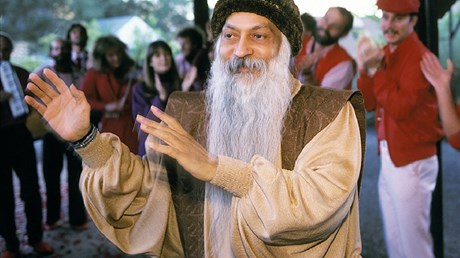
In the 1980s, thousands of enthusiastic enlightenment-seekers built a commune called Rajneeshpuram in the rugged Central Oregon desert and for their brief time there, clashed with the residents of the rural town of Antelope.

For anyone like me who grew up in Oregon in the ’80s, Rajneeshpuram is a part of the mythic landscape of the region. Stories about a guru with a fleet of Rolls Royces, rumors of sexual orgies, and casual jokes about bioterrorism (don’t eat at the salad bar!) are as much a part of our childhood as campfire tales about Bigfoot on Mt. Hood. My father, who was a youth pastor in the ’80s, took a tour of Rajneeshpuram toward the end. He came home with stories of heavily armed hippies and spaced-out farm workers who were probably drugged without their knowledge.

The Rajneeshees or sannyasins, as they call themselves, were members of a new religious movement founded by an Indian man known as Bhagwan Shree Rajneesh or Osho. (The group still exists, albeit in more modest form.) What began as a globetrotting search for cosmic illumination, a celebration of “free love,” and a quest to build a utopia in America ended in disappointment and criminal charges.

The recently released Netflix documentary Wild Wild Country unpacks the extraordinary story. Through interviews with Rajneesh’s followers, residents of Antelope, local journalists, politicians, and law enforcement, the documentary follows the group from their initial ashram, or commune, in India to their ill-fated intentional community built on the expansive Big Muddy Ranch.

It might be easy to dismiss Rajneeshpuram as a marginal “cult,” but the group’s combination of spirituality, capitalism, and celebrity culture ...

Continue reading...


from
http://www.christianitytoday.com/women/2018/may/wild-wild-country-hits-close-to-home-netflix.html

Our Call: Missionaries in a Secular Land

The reality is, Christians are interlopers. We are strangers and foreigners.

As Christians, I believe we should always be more driven by our missionary identity than we are by our national identity, our political identity, our environmental identity, our social identity, or even our church identity.

Don’t get me wrong. We ought to love our church. (I know I love my church.) And the Church (with capital C) is the bride of Christ, destined for eternity with God. But here on earth we must face the reality that our culture is not to be our primary identity.

Our culture is a mission field. We must see ourselves as people on mission. This is not our home. This is our mission field. Therefore, we all must see our vocations as mission—as kingdom work.

Strangers in a foreign land

First Peter 2:11 tells us that we are strangers and exiles. This land is not our home. But part of the challenge is that a lot of people want to fight for their homeland instead of acknowledging that we're supposed to have the mindset of foreigners and exiles.

Let’s put this into the facts that we know about our population. If the percentage of people who are nominally Christian is shrinking and nominal Christians become Nones, then we are dwelling in an increasingly secular land.

As a result, we need a reemphasis on gospel clarity. Being labeled Christian no longer means a ‘social Christian’, but instead is someone who's been changed by the power of the gospel, if indeed you have. This is a vital theological shift in the way we are viewed and should view our land.

Understanding these shifts is necessary in part because we live in an age of outrage. People in our land get ticked off over things that they don’t like. This calls us to gospel clarity. And missionary identity, seeing ourselves as ...

Continue reading...


from
http://www.christianitytoday.com/edstetzer/2018/april/our-call-missionaries-in-secular-land.html